
Expert reviews, honest comparisons, and in-depth buying guides — from your first refractor to a pro astrophotography rig.
🔬 Expert-Tested Reviews
💰 No Pay-to-Play Rankings
🔄 Updated Monthly
⭐ 4.9/5 Reader Rating
🎯 All Budgets Covered
🔬 Expert-Tested Reviews
💰 No Pay-to-Play Rankings
🔄 Updated Monthly
⭐ 4.9/5 Reader Rating
🎯 All Budgets Covered
Showing 1–6 of 70 results
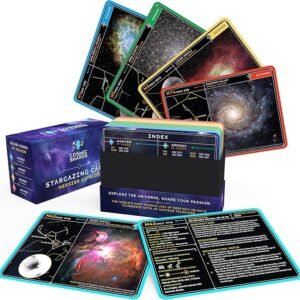
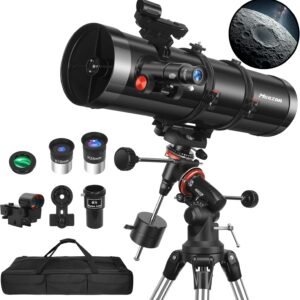
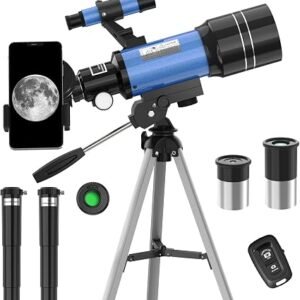
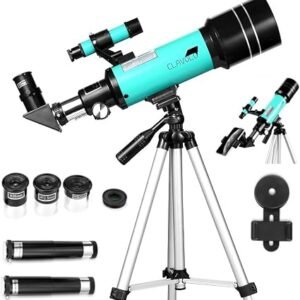
Beginner refractors to advanced reflectors — find your perfect instrument at any budget.
Planets, meteor showers, moon phases, and dark sky guides for visual observers.
Step-by-step guides for newcomers — pick the right gear and start right.
Cameras, mounts, and accessories to capture stunning images of the cosmos.
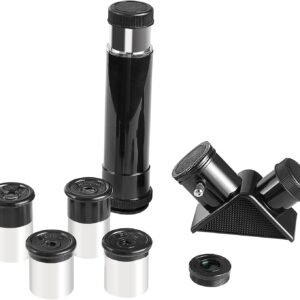
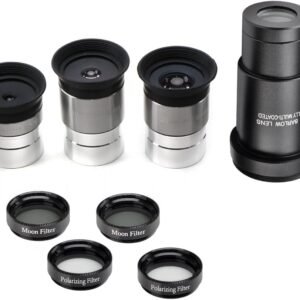
Eyepieces, filters, mounts, and tools to get more from your telescope.
Eclipses, conjunctions, meteor showers — never miss an event again.
Personally tested and ranked by our astronomy experts. Updated regularly with the latest models.
Buying a telescope is one of the most exciting — and most misunderstood — decisions in amateur astronomy. The difference between a department store scope and a well-chosen beginner instrument isn’t just price: it’s the difference between frustration and a lifetime of wonder.
Every telescope on SkyExplorer is physically tested under real dark-sky conditions. We evaluate optical quality, mechanical build, mount stability, ease of alignment, and overall value.
SkyExplorer earns commissions from qualifying Amazon purchases — but our recommendations are based solely on merit. A bad product has never made it into our top picks because of a higher commission rate.
Our contributors include astronomy educators, astrophotographers with 20+ years of experience, and dedicated amateurs who’ve spent thousands of hours under the stars.
Quick answers to the most common questions from beginner astronomers.
For most beginners, we recommend a 5″ or 6″ Dobsonian reflector like the Sky-Watcher 6″ Dobsonian (~$200-250). It gives great views without requiring alignment or electronics. Want something smarter? Try the Celestron StarSense 130AZ at $399.
We recommend spending at least $150-300. Anything cheaper is likely to disappoint with poor optics and wobbly mounts. Spend a little more and you’ll have a scope you keep for life.
With a typical beginner scope: the Moon’s craters in stunning detail, Jupiter’s cloud bands and moons, Saturn’s rings, star clusters, and bright nebulae. A larger aperture opens up fainter galaxies and deep-sky objects.
Both have pros and cons. Refractors are low-maintenance and great for planets. Reflectors give more aperture per dollar, making them better for deep-sky objects. For most beginners, a Dobsonian reflector offers the best bang for buck.
For planets, you typically want 100x-200x magnification. Most beginner scopes include eyepieces in the 20mm and 10mm range. Add a 2x Barlow lens for extra power.
Not necessarily. GoTo mounts automatically point at any of thousands of objects – great if you want to find things quickly. But manual mounts offer a great learning experience. GoTo adds $150-300+ to the scope’s price.
Yes, for the Moon and planets with a smartphone adapter. For deep-sky astrophotography you need a motorized equatorial mount and dedicated camera – significantly more investment. Start with lunar photography first!
The three most impactful: (1) a 2x Barlow lens to double your magnification range, (2) a red flashlight to preserve your night vision, and (3) a planetarium app like Stellarium to help you find objects.